
Written by: Nimesh Chakravarthi, Co-founder & CTO, Struct
Key Takeaways
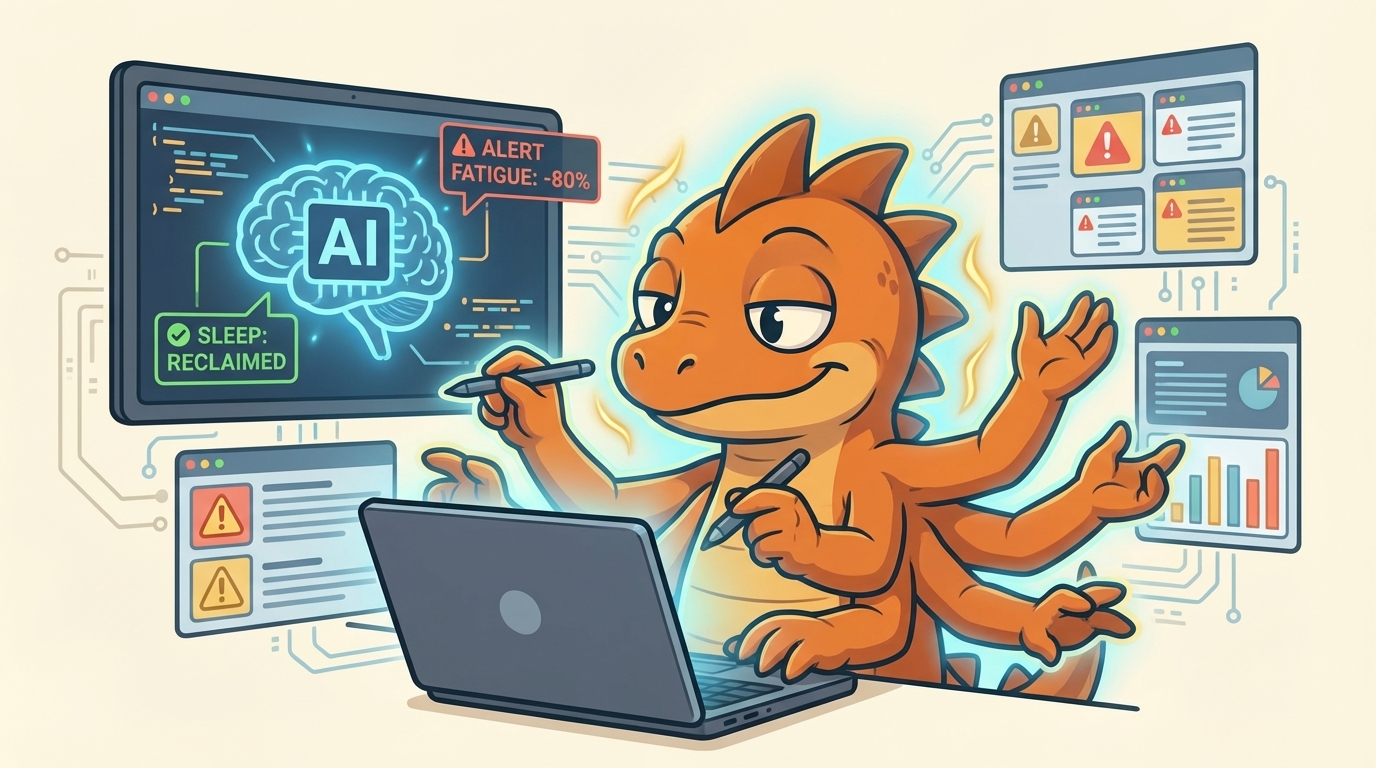
- AI cuts on-call alert triage time by 80%, from 45 minutes to 5 minutes, through automated investigation and contextual dashboards.
- Roughly 95% of alerts are noise, and intelligent grouping plus false positive filtering can reduce alert volume by up to 85% using ML pattern recognition.
- Contextual enrichment and smart routing provide blast radius assessment and expertise-based escalation, which prevents unnecessary team-wide wakeups.
- Automated root cause analysis reaches 60-90% accuracy, pulling logs from Datadog, Sentry, and GitHub for proactive handoffs.
- Teams that implement these seven tactics with Automate your on-call runbook via Struct can reclaim about four engineer-weeks monthly and increase delivery velocity.
The 3 AM Alert Storm Draining SRE Sleep and Product Velocity
Engineering teams face an escalating crisis of alert fatigue that destroys both sleep and product velocity. High on-call loads lead to burnout when combined with other engineering responsibilities, creating a perfect storm for technical organizations.
The numbers show the scale of the problem. Average on-call engineers receive roughly 50 alerts per week, with only 2-5% requiring human intervention. About 95% of alerts are noise, which forces highly paid engineers to spend 45 minutes manually triaging each incident across Datadog, Sentry, AWS CloudWatch, and GitHub just to decide whether an alert is actionable.
The downstream effects hit both people and the business. Senior engineers lose entire weeks to firefighting instead of building features. SLA breaches become common as investigation time eats into resolution windows. Junior engineers cannot take on-call duties because they lack the tribal knowledge to navigate complex distributed systems. Teams lose roughly four engineer-weeks per month to alert fatigue, and product velocity stalls.
Seven AI Tactics That Eliminate On-Call Alert Fatigue in 2026
1. Intelligent Alert Grouping and Correlation for Single-Incident Views
AI-powered correlation groups related alerts by analyzing logs, metrics, and traces to identify common root causes. AI-enabled accounts achieve 2X higher correlation rates than non-AI accounts, reducing alert noise by 27%. Instead of receiving 20 separate alerts for one database connection issue, engineers receive a single consolidated incident with full context.
Implementation stays simple and fast. Connect Slack channels to your observability stack such as Datadog and Sentry, configure correlation rules, then let AI identify patterns. Work that previously required 45 minutes of manual investigation across multiple dashboards becomes a five-minute review of one contextualized report.
2. Noise Reduction and False Positive Filtering with Adaptive Thresholds
Machine learning models trained on historical alert patterns can separate genuine incidents from transient noise. AI-powered anomaly detection reduces false positives by up to 80% through pattern recognition and distinguishing genuine threats from normal activities. A financial services case study reported an 85% reduction in alert volume and 92% decrease in false positives for authentication alerts after AI deployment.
Adaptive threshold management keeps alerts meaningful over time. AI continuously adjusts detection thresholds based on system patterns, organizational changes, and engineer feedback. This approach prevents noisy CPU spike alerts during normal traffic surges or deployment windows.
3. Contextual Enrichment and Blast Radius Assessment in One View
AI maps incident impact by correlating user sessions, transaction flows, and service dependencies. When an alert fires, the system quickly determines whether it affects 5 users or 5,000 and pulls relevant customer data plus service topology into a single dashboard. This contextual enrichment removes guesswork that can cause either overreaction or dismissal of critical alerts.
4. Smart Routing and Escalation Based on Ownership and Expertise
Context-aware routing sends alerts to the right engineer based on code ownership, expertise, and current workload. AI analyzes affected services, recent commits, and team specializations to route database issues to backend engineers and frontend crashes to UI specialists. This approach avoids the common pattern of waking the entire team for every alert.
5. Automated Triage and Root Cause Analysis Across Your Tooling
AI-powered root cause analysis correctly identifies root causes 60-70% of the time, which saves hours per incident by reducing investigation time. The system automatically queries logs from Datadog, correlates exceptions from Sentry, and cross-references recent GitHub commits to build a clear timeline of events.
Struct.ai leads this category as a Slack-native solution that correlates incidents within minutes and achieves an 80% reduction in triage time. While engineers sleep, Struct investigates alerts, pulls relevant context, and generates actionable dashboards ready for review at handoff.
6. Slack-Native Dashboards and Conversational AI for Faster Answers
Dynamic, incident-specific dashboards reduce context switching between tools. Engineers interact directly in Slack and request specific views such as “Show me logs from 5 minutes before the error” or “What was the deployment status during this timeframe?” The AI responds with relevant charts, logs, and analysis without manual queries across multiple platforms.
7. Predictive Remediation and Proactive Handoffs
Advanced AI systems suggest concrete fixes based on similar historical incidents and can generate pull requests for common issues. AIOps platforms have evolved from basic anomaly detection to agentic AI that drafts fixes, optimizes costs, correlates root causes across distributed systems, and auto-heals issues.
Struct.ai focuses on proactive investigation. The system begins analyzing alerts the moment they fire and completes full investigations before engineers wake up. This shift turns reactive firefighting into proactive incident management.
Automate your on-call runbook and experience the difference between reactive and proactive AI incident response.
Performance Benchmarks for Manual, Generic AI, and Struct.ai Workflows
| Metric | Manual Process | Generic AI (Claude) | Purpose-Built (Struct.ai) |
|---|---|---|---|
| Triage Speed | 45 minutes | 20 minutes (reactive) | 5 minutes (proactive) |
| Accuracy | 50-60% | 70% (context limits) | 85-90%+ |
| Setup Time | N/A | 30 minutes/prompt | 10 minutes |
| Slack-Native | No | No | Yes |
Fintech Case Study: A Series A fintech company with strict SLAs integrated Struct in under 10 minutes. The team achieved an 80% reduction in triage time, which enabled newer engineers to confidently handle on-call duties while protecting customer SLAs through instant blast radius assessment.
Step-by-Step Roadmap to Deploy AI for On-Call
Successful AI implementation starts with solid logging hygiene. Teams need structured logging with correlation IDs in tools like Sentry and Datadog. The setup process typically follows three short steps of about 10 minutes each: connect Slack channels and PagerDuty for alert ingestion, integrate observability tools such as Datadog and AWS CloudWatch, and link code repositories like GitHub for code context.
Evaluation criteria should cover SOC2 compliance for security, ROI measurement with a target of reclaiming four engineer-weeks per month, and integration capabilities. Benchmarked ROI includes 60-80% reduction in alert noise, 50% faster incident response, 30-40% lower observability costs, and 20% improvement in MTTR.
Teams can run neutral evaluations of tools like Rootly, Dropzone, and Cleric against Struct’s builder-first approach, which prioritizes rapid deployment and composable workflows for startup engineering teams.
Frequently Asked Questions
Is our data secure and compliant with regulations?
Modern AI on-call platforms maintain SOC2 and HIPAA compliance standards required by most Seed to Series C companies. Data processing occurs ephemerally, so logs are accessed, analyzed, and discarded without persistent storage. Security teams can review integration permissions and data flow documentation during evaluation.
How long does setup actually take?
Purpose-built solutions like Struct require about 10 minutes for initial setup. Teams authenticate three integration categories: issue sources such as Slack and PagerDuty, observability context such as Datadog and AWS CloudWatch, and code repositories such as GitHub. No complex enterprise deployment or sales calls are required.
What telemetry and logging requirements exist?
AI effectiveness depends on data quality. Teams need basic structured logging with correlation IDs, alerting triggers from monitoring tools, and integration with observability platforms like Datadog or cloud-native logging. Weak logging infrastructure limits AI accuracy, which makes proper telemetry hygiene essential.
How does this help with junior engineer onboarding?
AI provides automated context that removes tribal knowledge barriers. New engineers receive comprehensive incident summaries, suggested investigation steps, and relevant code context without constant senior engineer guidance. This support enables confident on-call participation within weeks instead of months.
What is the difference between generic AI and purpose-built tools?
Generic AI tools such as ChatGPT and Claude operate reactively, so engineers must gather logs, paste context, and guide investigation after waking up. Purpose-built tools work proactively and investigate alerts the moment they fire, then present complete analysis before human intervention. Context window limits and malformed log parsing further strengthen the case for specialized solutions.
Conclusion: Reclaim Engineering Velocity with AI-Powered On-Call
Alert fatigue represents a solvable crisis when teams apply strategic AI. The seven tactics described here, including intelligent grouping, noise reduction, contextual enrichment, smart routing, automated triage, conversational interfaces, and predictive remediation, turn reactive firefighting into proactive incident management.
The path forward starts with acknowledging that 95% of alerts are noise, 45-minute manual investigations destroy product velocity, and junior engineers need automated context to join on-call rotations. AI solutions like Struct.ai deliver an 80% reduction in triage time through proactive investigation and Slack-native workflows tailored for startup engineering teams.
Stop burning your best engineers on 3 AM log-hunting sessions. Set up Struct.ai free at struct.ai, and cut fatigue by 80%. Automate your on-call runbook and reclaim the product velocity your team deserves.
