
Written by: Nimesh Chakravarthi, Co-founder & CTO, Struct
Key Takeaways for Startup Engineering Leaders
- Manual incident triage no longer scales for growing startups. Engineers often spend 30–45 minutes per alert digging through logs and metrics across several tools.
- Modern automation tools now deliver root cause analysis and clear dashboards before engineers open their laptops, which sharply reduces MTTR.
- AI-powered investigation has become essential in 2026, and platforms that deploy in minutes rather than weeks fit seed to Series C companies best.
- Effective tools plug into existing stacks like Datadog, Sentry, GitHub, and Slack while showing measurable gains in triage speed and accuracy.
- Ready to eliminate manual triage from your incident response? See how Struct works and experience AI-powered root cause analysis in minutes.
Why Manual Incident Triage Is No Longer Sustainable
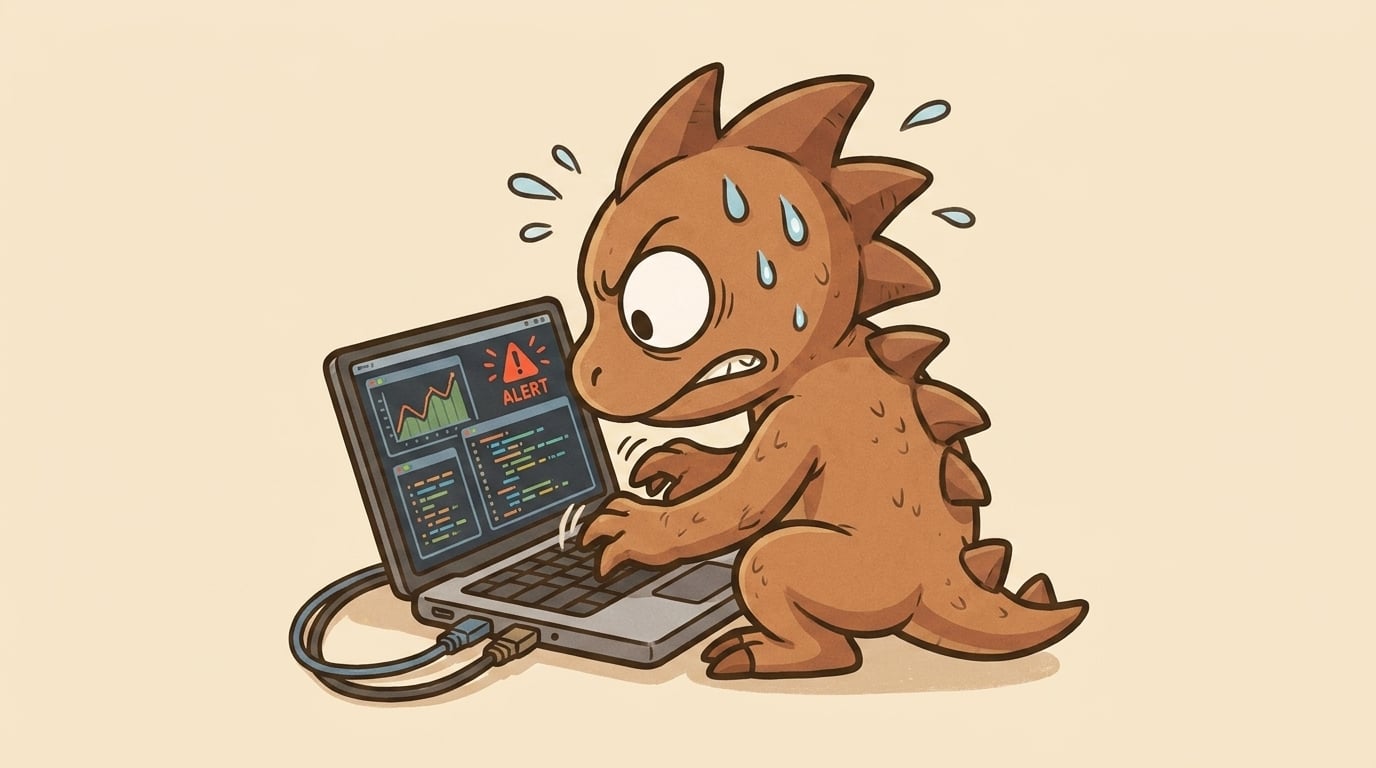
Software engineering teams now face an overwhelming volume of alerts every day. Organizations receive an average of roughly 4,300–4,500 security alerts per day, with 63–73% going uninvestigated. This alert fatigue slows product velocity because senior engineers spend entire weeks reacting to incidents instead of building features.
Mean Time to Resolution (MTTR) breaks into several phases: detection, triage, investigation, and resolution. The investigation and root cause analysis phase typically consumes the largest share of MTTR. During this phase, engineers manually correlate logs, review recent deployments, and cross-reference error patterns across observability tools.
First-pass investigation covers the initial analysis when an alert fires. Engineers determine the blast radius, identify affected services, and gather relevant telemetry data. This process traditionally requires deep system knowledge and familiarity with multiple monitoring platforms. For scaling startups, this creates a bottleneck because only senior engineers can handle on-call duties effectively.
Ready to eliminate manual triage from your incident response? Get root cause analysis in minutes with Struct’s automated investigation.
The 2026 Operational Landscape for Startups
These manual triage challenges have driven rapid adoption of AI-powered solutions. The incident response landscape has shifted dramatically toward AI-assisted analysis. AI automation will autonomously resolve or escalate more than 90% of Tier 1 alerts in 2026, including triage, initial enrichment, categorization, and some containment actions.
For seed to Series C companies, this shift creates both opportunity and constraint. Unlike enterprises with dedicated SRE teams and complex deployment pipelines, startups need tools that deploy in minutes rather than months. A typical startup workflow involves alerts firing in Slack channels, engineers acknowledging in PagerDuty, then manually investigating across Datadog, Sentry, and GitHub to piece together what happened.
Automated triage and enrichment attaches runbooks, identifies service owners, pulls recent deployment history, checks similar past incidents, and assesses preliminary severity before an engineer begins investigating. This automation layer removes the initial context-gathering phase that usually consumes 15–30 minutes per incident.
Common Challenges Software Engineering Teams Face
Alert fatigue represents the primary challenge for on-call engineers. Burnout remains a major reason security and reliability professionals leave SOC-related roles, often driven by high alert volumes and frequent false positives.
Knowledge silos create another significant bottleneck. Senior engineers hold institutional knowledge about system architecture, common failure patterns, and debugging techniques, and that knowledge often stays undocumented. This gap means that when alerts fire, junior engineers lack the context needed to investigate effectively. As a result, teams escalate to senior members regardless of the time of day and create a constant dependency on their most experienced engineers.
Context switching between tools compounds these problems. A typical investigation requires checking Slack for the initial alert, opening Datadog for metrics, reviewing Sentry for exceptions, examining recent deployments in GitHub, and sometimes querying cloud logs directly. Without automated alert routing and enrichment, teams lose substantial time just gathering context before any real debugging begins.
Best Practices for Modern Incident Response
Effective incident response automation starts with standardizing runbooks and investigation procedures. Before teams implement any automation tool, they should document debugging workflows, common correlation IDs, and escalation paths. This upfront work matters because AI-powered investigation systems learn from and build on these documented patterns to deliver accurate root cause analysis.
Automating the initial investigation pass delivers the highest impact for software engineering teams. Automated diagnostics reduce mean time to resolution by eliminating the delay between alert detection and root cause analysis, automatically capturing diagnostic data such as logs, top CPU processes, running queries, and thread dumps the instant an alert fires.
AI-powered correlation now represents the next evolution in incident response. Agentic AI systems automatically correlate telemetry data across AWS services without human intervention and surface root causes, saving engineers hours on complex incidents.
How to Evaluate Incident Response Automation Tools
Setup speed should be a primary evaluation criterion for startup teams. Tools that require weeks of configuration or dedicated implementation resources rarely align with startup constraints. As noted earlier, setup speed matters, so look for platforms that integrate with existing observability stacks (Datadog, Sentry, AWS CloudWatch) and communication tools (Slack, PagerDuty) within minutes.
Integration depth matters more than breadth for engineering teams. The tool should automatically query logs, correlate metrics, and pull code context without manual intervention. Effective Slack-native incident automation includes creating channels named inc-YYYY-MM-DD-slug, setting topics with severity and status, posting structured headers with runbook buttons, and inviting responders based on severity levels.
MTTR impact should be measurable and significant. According to the 2024 DORA report, elite engineering teams consistently recover from incidents in less than an hour, while other teams may take days. Automation tools should show clear improvements in investigation speed and accuracy against your current baseline.
What Software Engineers Actually Say About Automation
Software engineering teams consistently report frustration with manual investigation processes. Common complaints include spending entire nights debugging issues that turn out to be false positives, losing context while switching between multiple monitoring tools, and feeling overwhelmed by alert volume during peak traffic periods.
Teams that adopt automation report dramatic improvements in the on-call experience. Engineers describe being able to assess incident severity immediately, having clear starting points for investigation, and feeling confident putting junior team members into the on-call rotation because automation provides comprehensive context.
The most successful implementations focus on practical deployment rather than exhaustive feature lists. Teams value tools that work quickly with their existing stack over platforms that demand extensive customization or training.
Ranked Comparison: Best Incident Response Automation Tools
Best for Startups: Struct
Struct delivers AI-powered automated investigation tailored for scaling software engineering teams. Struct deploys in about ten minutes, connects with leading observability platforms, Slack, and GitHub, and meets SOC 2 and HIPAA requirements.
The platform automatically investigates alerts the moment they fire, correlating logs, metrics, and code to provide root cause analysis before engineers open their laptops. Struct reduces triage time by 80%, which drives down overall MTTR for busy teams.
Struct’s Slack-native interface lets engineers ask follow-up questions, test hypotheses, and request additional context without leaving their communication hub. The platform generates dynamic dashboards with supporting evidence and unified timelines for each incident.
Best for Slack Integration: incident.io
incident.io positions itself as a Slack-native platform that unifies on-call scheduling, AI post-mortems, status pages, and incident response in one system, allowing teams to run the entire incident lifecycle using /inc commands without opening a browser.
The platform focuses on reducing coordination overhead for incident response. For a 50-person engineering team handling roughly 18–20 incidents per month, manual post-mortem reconstruction wastes 60–90 minutes per incident while incident.io’s AI generates drafts in 10–15 minutes, delivering over $21,000–$29,700 in annual engineer time savings.
Best for Enterprises: Cortex XSOAR
Cortex XSOAR provides comprehensive security orchestration for large organizations with dedicated security teams. Cortex XDR can trace attack paths and applies automation to help disrupt threats, which can reduce investigation times.
The platform requires significant implementation resources and suits enterprises with complex compliance requirements and dedicated security operations centers.
The following comparison highlights the difference in deployment speed and accessibility between startup-focused and enterprise tools:
| Tool | Setup Time | MTTR Reduction | User Limits |
|---|---|---|---|
| Struct | 10 minutes | 80% triage time reduction | Unlimited (Growth plan) |
| incident.io | minutes (for example, 30 seconds for installation or 3 minutes per component) | Up to 80% | Team-based pricing |
| Cortex XSOAR | Weeks to months | Variable | Enterprise licensing |
Transform your incident response workflow today. Start reducing triage time by 80% with Struct’s rapid setup.
2026 AI Capabilities and Compliance Requirements
AI agent handoff capabilities represent a significant advancement for 2026. Level 4 AI-driven investigation and resolution uses an AI agent that queries logs, metrics, traces, and deployment history to construct a root-cause hypothesis. For known patterns it executes remediation automatically, while for novel incidents it presents findings and recommendations to a human for approval.
Compliance requirements continue to evolve for fast-growing companies. Tools must provide audit trails, data residency controls, and integration with existing security frameworks. SOC 2 Type II and HIPAA compliance now function as baseline requirements for startups that handle sensitive data.
Frequently Asked Questions
How quickly can incident response automation tools be deployed?
Modern incident response automation tools designed for startups can be deployed in minutes rather than weeks. Struct, for example, requires only authentication with your existing observability tools (Datadog, Sentry), code repository (GitHub), and communication platform (Slack). After this quick setup, automated investigations begin immediately when alerts fire. Enterprise platforms often require weeks of configuration, custom integrations, and dedicated implementation resources.
What level of observability data is required for effective automation?
Effective incident response automation requires basic logging, structured alerts, and trace correlation IDs in your existing observability stack. Teams already using tools like Sentry for error tracking, Datadog or AWS CloudWatch for metrics, and GitHub for code management have sufficient telemetry for automation to provide value. The automation works by correlating existing data sources rather than demanding new instrumentation. Teams with minimal logging or no structured alerting will see limited benefits until they strengthen their observability foundation.
How do these tools handle false positives and alert noise?
Modern automation platforms use AI to distinguish genuine incidents from transient issues that resolve on their own. The systems analyze historical patterns, correlate multiple signals, and assess the real impact on users or services. Advanced platforms can automatically suppress alerts for known maintenance windows, filter out recurring false positives, and escalate only incidents that require human intervention. This intelligent filtering reduces alert fatigue while keeping critical issues front and center.
Can junior engineers effectively use incident response automation?
Junior engineers can use incident response automation effectively because it addresses the knowledge gap that usually blocks them from on-call duties. The automation provides comprehensive context, suggested investigation steps, and clear escalation paths for every alert. This support removes the need for deep institutional knowledge about system architecture or debugging techniques. The automation acts like a senior engineer guiding the initial investigation, which makes on-call safer and more manageable for newer team members.
What security and compliance considerations apply to incident response automation?
Incident response automation tools must meet the same security standards as other critical infrastructure components. Look for SOC 2 Type II compliance, HIPAA compliance if you handle healthcare data, and clear data residency controls. The tools should use read-only access to your observability data, process information ephemerally without persistent storage, and provide comprehensive audit trails for all automated actions. Teams with strict data residency requirements should confirm that the platform can operate within their VPC or geographic boundaries.
Conclusion and Next Steps for Your Team
Manual incident triage no longer works for software engineering teams at scaling startups. Rising alert volumes, complex distributed systems, and pressure for rapid product development now require automated first-pass investigation capabilities.
The most effective approach involves selecting tools that integrate smoothly with existing observability stacks, deploy quickly, and provide immediate value without heavy configuration. Teams should prioritize platforms that deliver the dramatic triage reduction mentioned earlier while still allowing customization of investigation workflows for their specific architecture.
Start by auditing your current incident response process, documenting common failure patterns, and listing the tools where your team spends the most time during investigations. This foundation will guide your selection of automation platforms and support a successful rollout.
Ready to eliminate 3 AM debugging sessions and give your software engineering team their product velocity back? Book a demo and see how Struct investigates incidents before you even open your laptop.
